

Intuition in the Age of AI
A Reflection for Decision-Makers and Filmmakers
Artificial intelligence has become remarkably capable.
It can summarize, forecast, structure, simulate. It drafts, analyzes, organizes, and predicts with astonishing speed. Its fluency is impressive. Its confidence can feel persuasive.
And yet something essential remains distinctly human.
If you lead, create, produce, or decide for a living, you may already sense it: as our tools become more sophisticated, the question shifts from What can AI do? to What must I remain responsible for?
Because AI processes information.
But it does not experience meaning.
What Intuition Actually Is
Intuition is often mistaken for guesswork. In reality, it reflects something far more structured.
Contemporary cognitive science describes the brain as a predictive system. We are constantly generating models of what is likely to happen next. We compare incoming information against those internal models and update accordingly. This process — often called predictive processing — happens largely outside conscious awareness.
In other words, we are always making rapid predictions.
When something “feels off,” it is often because incoming data does not match the brain’s implicit model. When something feels aligned, coherent, or promising, it reflects a match between experience and expectation.
That rapid, embodied signal is what we call intuition.
It is not mystical.
It is the mind integrating decades of lived experience in milliseconds.
Where the Real Risk Lies
The risk in the age of AI is not that machines will replace human judgment.
The risk is that we may quietly defer to them.
When AI produces something polished and authoritative, it can feel easier to trust the output than our own subtle hesitation. But hesitation is often information. So is friction. So is a fleeting image that reframes the decision entirely.
AI predicts based on historical patterns.
Human beings predict based on lived context.
Those are not the same thing.
Three Practices to Strengthen Intuitive Discernment
Rather than rejecting AI, the wiser approach is integration. But integration requires attention.
1. Notice the First Signal
When AI presents a solution or draft, pause before editing.
What happens internally?
Is there a slight contraction?
A lift?
A sense of clarity?
A quiet resistance you can’t yet explain?
Those micro-signals are the brain’s predictive system updating in real time.
Before you override them, observe them.
2. Attend to Creative Dissonance
Filmmakers know this instinctively.
A scene can be technically correct and still feel emotionally inert. Dialogue can be polished yet hollow. A casting decision can look ideal on paper but disrupt chemistry in the room.
AI tends toward statistical coherence.
Art depends on lived coherence.
If something feels flattened or tensionless, your intuitive system is registering a mismatch between narrative truth and surface structure.
That friction deserves investigation.
3. Think in Trajectory
AI models probability.
Intuition senses direction.
When making a strategic decision, ask not only, “What is likely to happen?” but also, “Who do I become if I continue down this path?”
Predictive processing allows us to simulate identity shifts, relational changes, and creative evolution. That kind of modeling draws on embodied memory and values — dimensions AI does not possess.
Leaders and artists are shaped not only by outcomes, but by trajectory.
ABOUT VICTORIA LYNN WESTON
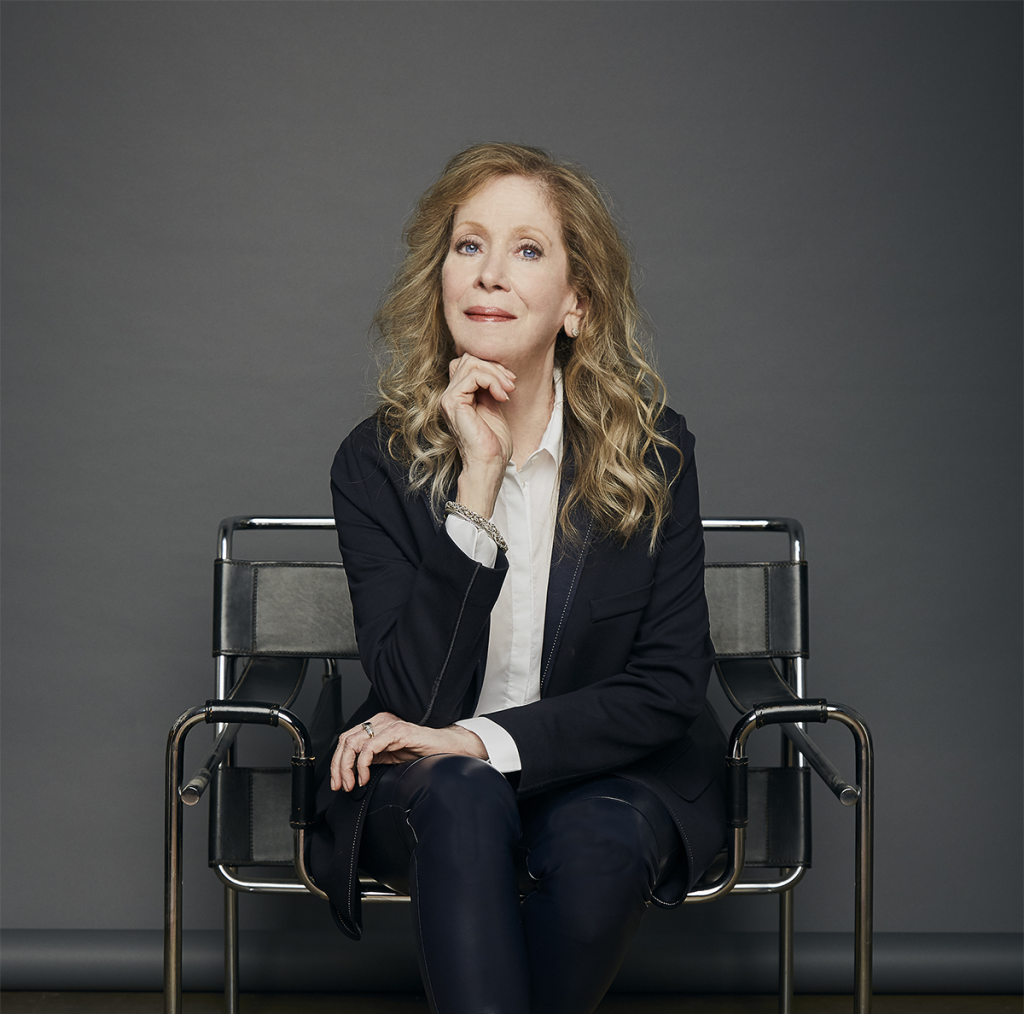 Victoria lynn Weston is an intuitive consultant and motivational speaker who works with executives, entrepreneurs, and creative leaders navigating high-stakes decisions. For over 25 years, she has helped upper management teams sharpen intuitive discernment as a strategic complement to data and analysis.
Her work focuses on predictive pattern recognition, embodied decision-making, and strengthening internal authority in high-pressure environments. Drawing from cognitive science principles and real-world business experience, Victoria teaches leaders how to integrate intuition with logic — especially in moments where spreadsheets and projections alone cannot resolve complexity.
In addition to her consulting practice, Victoria is a filmmaker and producer, bringing a deep understanding of creative leadership, risk assessment, and narrative intelligence to her work with clients.
She speaks on intuition in the age of AI, decision-making under uncertainty, and the psychological cost of overriding internal signals in data-driven cultures.


